The global shift away from fossil fuels is essential to address the climate crisis. But the growing demand for critical energy transition minerals must not create new frontiers of environmental destruction, human rights violations and social injustice.
Who pays the price for the minerals powering our green future?
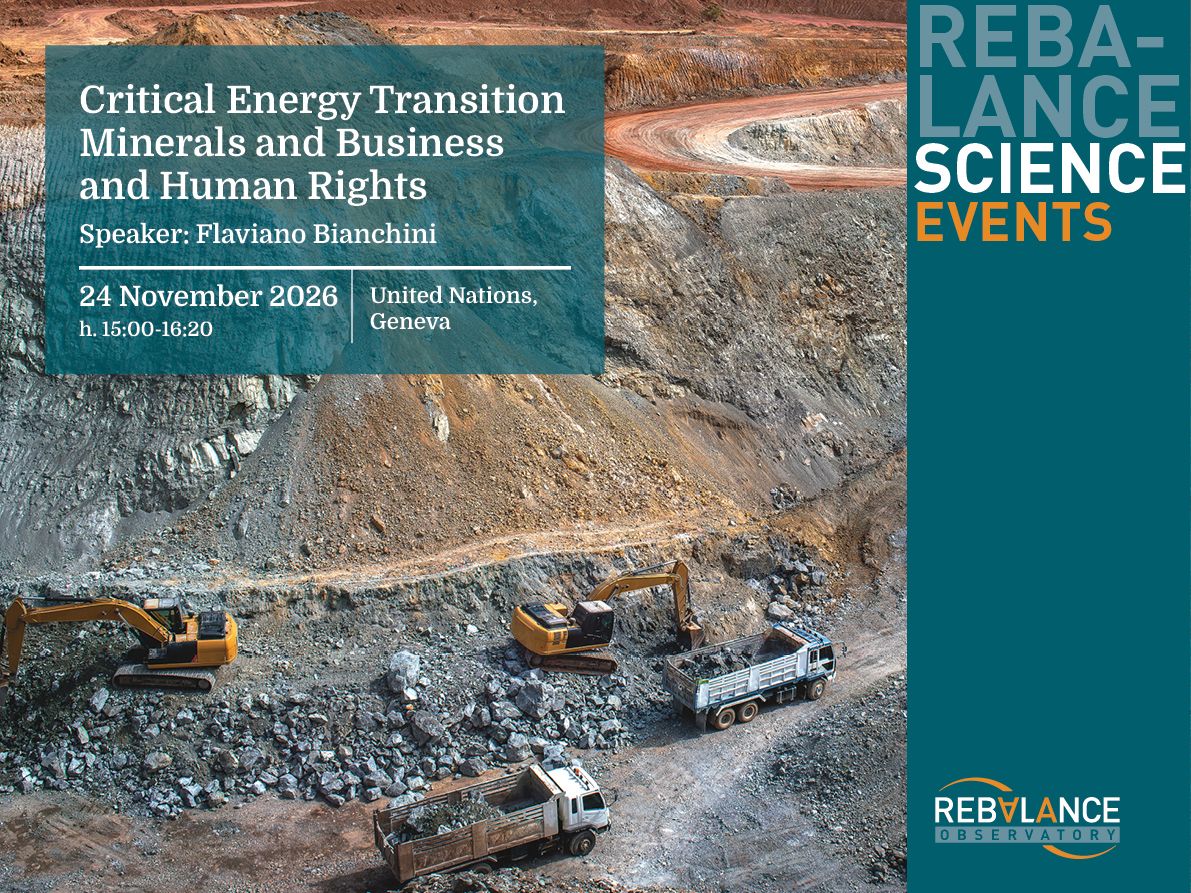
This is one of the crucial questions that Flaviano Bianchini will help address at the 2026 UN Forum on Business and Human Rights, during the session: Critical Energy Transition Minerals and Business and Human Rights.
Co-organised with the UN Working Group on Business and Human Rights, Rights and Accountability in Development, and several international civil society and institutional partners, the session will explore how to make mineral supply chains more transparent, accountable and respectful of human rights.
At the heart of the discussion are issues that cannot be overlooked:
- The environmental and health impacts of mining on local communities.
- The rights of Indigenous Peoples and workers.
- The protection of environmental human rights defenders.
- Corporate accountability and access to justice.
- The responsibility of businesses and financial institutions in ensuring a genuinely just energy transition.
The energy transition cannot be considered sustainable if its costs are borne by the communities and territories least responsible for the climate crisis.
Flaviano Bianchini’s contribution is part of a broader call to ensure that the transition to a low-carbon economy goes hand in hand with environmental justice, corporate accountability and the protection of human rights.
Because a truly just transition is not only about what energy we produce, but also about how we produce it, where its resources come from, and whose rights we protect along the way.